


relational astrology
Astrologies are relational languages, rooted in place and shaped by the cultural epistemologies of the peoples who engage with them, in a co-creative process of both “wording and worlding the world” (Hospicing Modernity, 2021).
Sometimes people tell me that they don’t “believe” in astrology, which is perfectly ok with me, and I inquire with curiosity what they think that astrology actually IS?
Often the response is based on the kind of modern horoscopic astrology that you see in magazine columns or on social media, espousing which zodiac sign is likely to have a great or terrible year, or which zodiac signs are compatible with which others. While this kind of astrology can have its place and I’m not raining on anyone’s parade, that is not the astrology that interests me.
In my view, astrology is not a belief system at all but more of a clock simply telling us something about the quality of what time it is.
My orientation to astrology is grounded in the Hermetic dictum, “as above, so below” — an ancient aphorism with echoes from cultures around the world that observed a kind of symmetry to the phenomenal world with respect to the fractal nature of ephemera, the qualities of time experienced on earth through the solar year of seasons, the lunar cycle, life and death cycles of plants and animals. Western hard sciences of mathematics and physics, biology and astronomy, as well as philosophy, theory of mind and consciousness studies, converge in exploration of these phenomenon that are described in systems of Traditional Ecological Knowledge obtained over millennia of empirical observation. These cosmologies of nonseparability, or kinship with all that is, and the ways that human cultures interpret the archetypal associations with qualities of time, of seasons, of life and death and everything in between: these are the components of the astrologies that interest me.
A relational approach to the planets, the stars, the cosmos, and the phenomenal world is the foundation of my work with astrology. My meaning-making system or cosmovision has been shaped by ancestral teachings from my Mesoamerican ancestors as well as archetypal and traditional Hellenistic astrology with ancient roots in Mesopotamia. My approach is one of relational curiosity rather than dogmatism, and I invite you into a deeper relationship with the cosmos and web of existence through an exploration of this work together.







The following curated resources have been influential in my exploration of the cosmos and consciousness through kincentric, relational frameworks — the roots of which can be found in earth-based traditional cultures around the world, lovingly practiced and fiercely protected by wisdom keepers from all walks of life. Deep gratitude to these lineage carriers for these messages of interconnectedness, awe, and love.
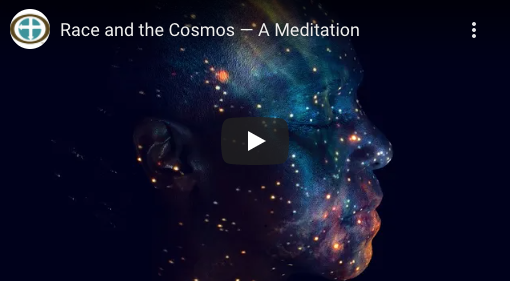
Race & the Cosmos: a meditation
Barbara Holmes, contemplative, writer, activist & theologian

"We respond to a deeply interdependent and responsive universe through shared experiences. This means that despite signs of postmodern fragmentation and the rise of radical individualism, we cannot carve out shared destinies in isolation. We are born not only into a wondrous and mysterious life space but also into communities of interpersonal reliance. These communities of care and crisis lend meaning and congruence to our lives and help to shape our collective stories. These stories and learned practices disclose the pitfalls and potential for human fulfillment, but more importantly, they describe a cosmos that is interwoven with mystery."
— Barbara Holmes, Joy Unspeakable
cosmos & psyche
Richard Tarnas, philosopher, cultural historian, & archetypal astrologer
The following is a 16-minute excerpt from the book Cosmos and Psyche: Intimations of a New World View by Richard Tarnas. Cosmos and Psyche challenges the basic assumptions of the modern world view with an extraordinary body of evidence that points towards a profound new understanding of the human role in the cosmos.
Living Beings as Our Kith and Kin
by Robin Wall Kimmerer
In indigenous ways of knowing, other species are recognized not only as persons, but also as teachers who can inspire how we might live. We can learn a new solar economy from plants, medicines from mycelia, and architecture from the ants. By learning from other species, we might even learn humility.
Colonization, we know, attempts to replace indigenous cultures with the culture of the settler. One of its tools is linguistic imperialism, or the overwriting of language and names.
Among the many examples of linguistic imperialism, perhaps none is more pernicious than the replacement of the language of nature as subject with the language of nature as object. We can see the consequences all around us as we enter an age of extinction precipitated by how we think and how we live.
Might the path to sustainability be marked by grammar?
Let me make here a modest proposal for the transformation of the English language, a kind of reverse linguistic imperialism, a shift in worldview through the humble work of the pronoun. Might the path to sustainability be marked by grammar?
Language has always been changeable and adaptive. We lose words we don't need anymore and invent the ones we need. We don't need a worldview of Earth beings as objects any more. That thinking has led us to the precipice of climate chaos and mass extinction.
We need a new language that reflects the life-affirming world we want. A new language, with its roots in an ancient way of thinking.
If sharing is to happen, it has to be done right, with mutual respect. So, I talked to my elders. I was pointedly reminded that our language carries no responsibility to heal the society that systematically sought to exterminate it.
At the same time, others counsel that "the reason we have held on to our traditional teachings is because one day, the whole world will need them." I think that both are true.
English is a secular language, to which words are added at will. But Anishinaabe is different. Fluent speaker and spiritual teacher Stewart King reminds us that the language is sacred, a gift to the People to care for one another and for the Creation. It grows and adapts too, but through a careful protocol that respects the sanctity of the language.
He suggested that the proper Anishinaabe word for beings of the living earth would be 'Bemaadiziiaaki'. I wanted to run through the woods calling it out, so grateful that this word exists. But I also recognized that this beautiful word would not easily find its way to take the place of 'it'. We need a simple new English word to carry the meaning offered by the indigenous one.
Living the grammar of animacy
Inspired by the grammar of animacy and with full recognition of its Anishinaabe roots, might we hear the new pronoun at the end of Bemaadiziiaaki, nestled in the part of the word that means land?
'Ki' to signify a being of the living earth. Not 'he' or 'she,' but 'ki'. So that when we speak of Sugar Maple, we say, "Oh, that beautiful tree, ki is giving us sap again this spring." And we'll need a plural pronoun, too, for those Earth beings. Let's make that new pronoun 'kin'.
So we can now refer to birds and trees not as things, but as our earthly relatives. On a crisp October morning we can look up at the geese and say, "Look, kin are flying south for the winter. Come back soon."
Language can be a tool for cultural transformation. Make no mistake: 'Ki' and 'kin' are revolutionary pronouns. Words have power to shape our thoughts and our actions. On behalf of the living world, let us learn the grammar of animacy.
We can keep 'it' to speak of bulldozers and paperclips, but every time we say 'ki,' let our words reaffirm our respect and kinship with the more-than-human world.
Let us speak of the beings of Earth as the 'kin' they are.
Excerpt from: Kimmerer, RW (25 April 2015). Living beings as our kith and kin: we need a new pronoun for nature. The Ecologist.